
DATA CENTERS: AI INVADES MONTANA

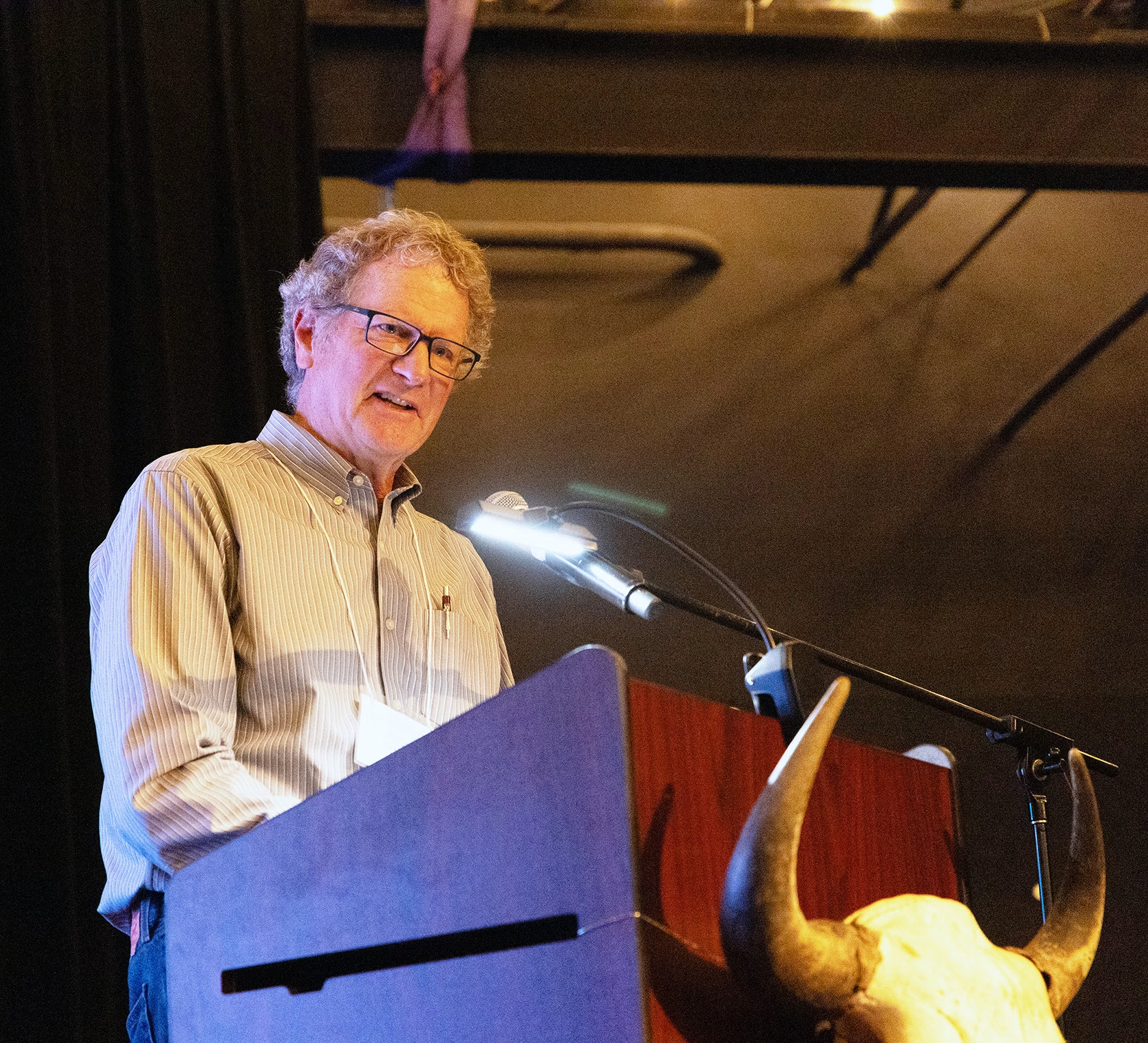
Picture of JACK LEUTHOLD

JACK LEUTHOLD

Contact me for more information on this topic! You can call, shoot me a text, or send me an email, whatever is easiest.

ARE DATA CENTERS INEVITABLE?

All across the country people are organizing, fighting back, and refocusing the conversation on the health of everyday people and our communities. From Tennessee, to Virginia, to Tucson, diverse coalitions are building power together and are successfully resisting what some say was inevitable. The power needed to push back comes from Montanans coming together. If you are interested in getting involved in this fight, let us know.

NEXT OPPORTUNITY TO GET INVOLVED

Join Northern Plains on April 20 at 6:00 pm for an all-in organizing call over zoom!

DATA CENTERS

WHAT ARE DATA CENTERS ANYHOW?

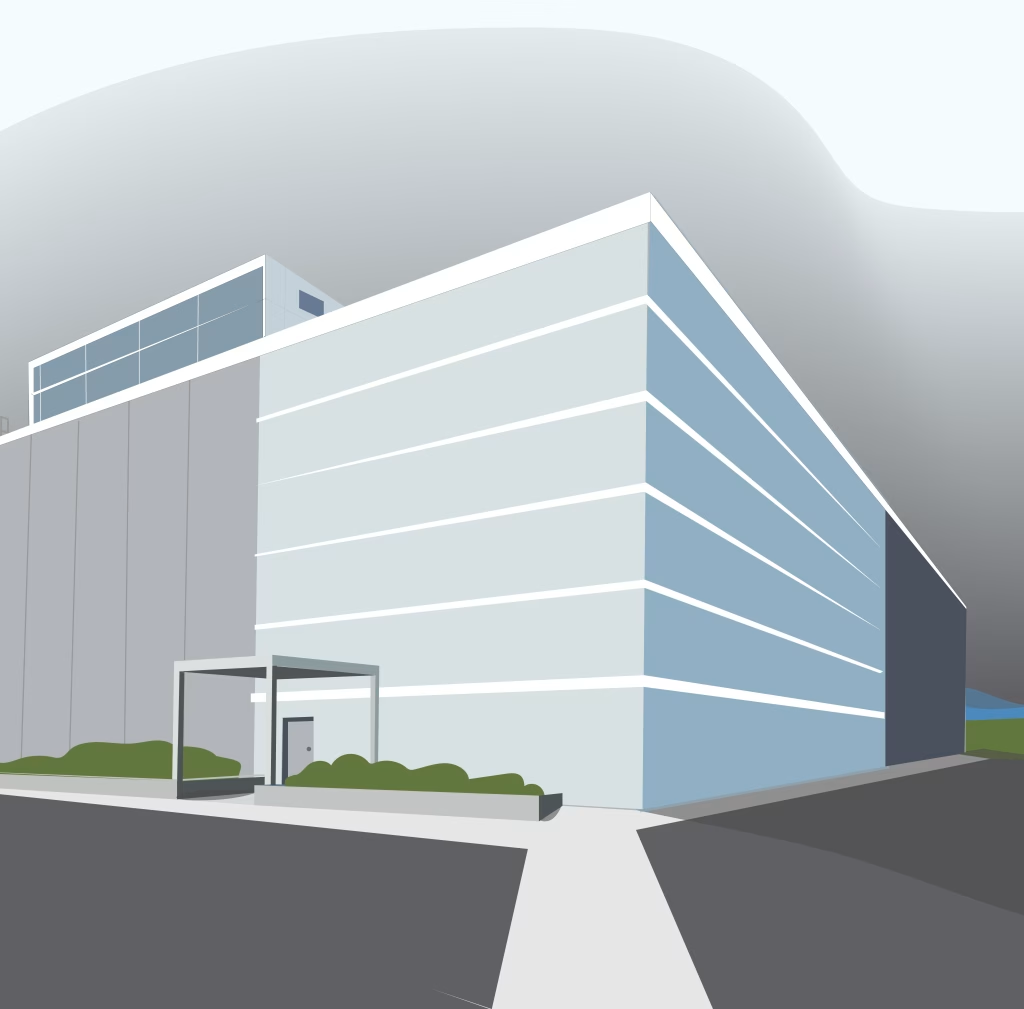
Data centers are huge warehouses full of computer servers and other computer equipment that powers artificial intelligence and other technologies. Oftentimes, as is the case here in Montana, instead of one large warehouse, data center proposals are actually multi-hundred or multi-thousand acre campuses with a ton of infrastructure sprawling across it. For example, Quantica is proposing a data center project in Broadview (30 miles north of Billings) that would cover 5,000 acres.

Quantica has announced a 5,000 acre data center, called the “Big Sky Campus,” and is slated to begin Phase I construction in 2026 near Broadview, MT. The site advertises a mix of power from NWE with large-scale on-site solar, wind, and battery storage for Phase 1 zero-carbon, resiliency (Rendering by Big Sky Digital Infrastructure).

WHY THE SUDDEN DATA CENTER BOOM?

The United States is going through a rapid expansion of artificial intelligence (AI) technology right now. Four of the biggest AI companies – Nvidia, Microsoft, Alphabet, and Meta – have poured wild amounts of money into the AI world. Nvidia, considered an industryleader in the AI world, recently made a $100 billion deal with OpenAI (Chat GPT maker) in 2025. Microsoft announced plans to invest around $80 billion in data center development in 2025. The parent companies of Meta (Facebook’s parent company) and Alphabet (Google’s parent company) have announced plans to invest a combined $157 billion in AI technology as well.
Coupled with these mind boggling investments are actions from the Trump Administration focused on AI deregulation and accelerated permitting for large-scale AI data centers. These government actions, coupled with the enormous amounts of money being poured into the industry, has created an industry that’s purpose centers around higher profits for Wall Street and leaves everyday people dealing with financial and environmental harm.

In Nov. 2025, Northern Plains welcomed Senior Campaign Manager at Kairos and data center researcher Nicole Sugerman, to speak at our Annual Meeting on the subject of data centers, their rapid ascension across the United States, and the possible implications and pitfalls surrounding this mysterious industry.

WHAT ARE THE BIG PROBLEMS THAT DATA CENTERS CREATE?

 
Financial Impacts to Ratepayers
To supply the power needed to service these data centers, utilities will likely need to invest in new generation and/or upgrades to their transmission system. These costs will be borne by everyday ratepayers and could lead to monthly energy bills for Montana families and small businesses skyrocketing.

Land & Water Impacts
Data center proposals need amazing amounts of land to operate. For instance, Quantica’s proposed data center in Broadview, MT is planned to be a 5,000 acre campus – or about 3,800 football fields. In addition to this enormous footprint, data centers require a huge amount of water to run efficiently. Depending on the size of the project, data centers require anywhere from 300,000 to 5,000,000 gallons of water per day to operate.

Reliance on Outdated Energy Generation
These projects have the potential to more than double the energy demand of NorthWestern Energy. Our utility currently provides around 760 megawatts of energy to all of their Montana customers. If all the current project proposals came to fruition, they would be on the hook for an additional 1,400 megawatts. Utilities will likely look to aging fossil fuel infrastructure to provide this power and put the high-costs associated with it on the backs of ratepayers.

"We're living through a historic moment in terms of the speed and capital that a small number of companies are throwing into AI and data centers. We need to organize and put real protections in place before the rules are written for Montanans."
Mike McDearmon
Member Leader

FACT CENTER

RATEPAYERS OVER-PAYING

Data centers cost millions -- and sometimes billions -- to construct, and you could be the one paying for them. In 2025, NWE charged its ratepayers $240M+ for their unapproved methane plant in Laurel, MT.

MORE TAX BREAKS FOR THE RICH

The Montana data center property tax rate of 0.9% is lower than most residential properties, agricultural land, and other commercial properties in Montana.

MASSIVE AMNTS OF WATER

Depending on the size of the project, data centers require anywhere from 300,000 to 5,000,000 gallons of water per day to operate.

THE MYTH SURROUNDING JOBS

As data centers continue to be built, the technology they are facilitating - artificial intelligence - is leading to huge layoffs across the nation. Data centers generate relatively few jobs compared to the cost of building and amount of land it occupies.

OUTRAGEOUS ENERGY CONSUMPTION

NWE produces about 760 megawatts (MW) of power annually. If all the current project proposals came to fruition, that figure could more than double to 1,400 MW, and customers would be on the hook to pay for it.

BACKDOOR DEALS

It’s often very difficult to find out who is funding projects or how the construction will impact communities. And the troubling practice of Non-Disclosure Agreements between big tech and local governments blocks community participation.

DATA CENTERS COMING TO MONTANA
AND WHAT WE CAN DO ABOUT IT

CURRENT MONTANA DATA CENTER PROPOSALS

There are four data center proposals moving forward in Montana right now – two in Butte, MT, one in Broadview, MT, and one outside of Missoula, MT. However, NorthWestern Energy (Montana’s largest regulated electric utility) is in discussions with 11 other data center developers about the potential of data centers in Montana and South Dakota.

Broadview
Broadview Project – Quantica Infrastructure
  • Quantica Infrastructure is a Texas-based company that was created by a private equity frim called EnCap Investments.
  • Quantica is looking to develop a 5,000-acre tech campus, just two miles south of Broadview.
  • The campus will house potentially dozens of data center buildings and other infrastructure and have an energy need of 1,000 megawatts.
  • Quantica has voiced plans to bring renewable energy with the project
    • The company has around 44,000-acres of leased land that they plan to use for wind and solar development
    • They have also voiced their desire to bring on-site storage as well
  • Back-up diesel generators will be included.
  • No end-user has been selected for this project (I.e., Quantica is only building the infrastructure. The ‘end-user’ – a company like Microsoft or Google – would be the ones using the infrastructure for tech purposes.)_
Bonner01
Bonner Project Krambu
  • Krambu is a San Jose, CA-based data center company that operates in WA, ID, and MT.
  • This project is projected to be a about 9 to 10 megawatts and the company has said they would like to expand that in the future.
  • The project is set to be constructed at the Bonner Mill Industrial Park.
  • It’s been reported that the project will receive power from Energy Keepers Inc. –  an independent power producer, wholly owned by the Confederated Salish and Kootenai Tribes.
  • Missoula County is currently in discussion with the developer about various regulations and a lease agreement.
  • Developer said the data center will bring back 20 of the about 100 jobs that were lost when Universal Forest Products closed down their operation of the mill.
  • Sources:
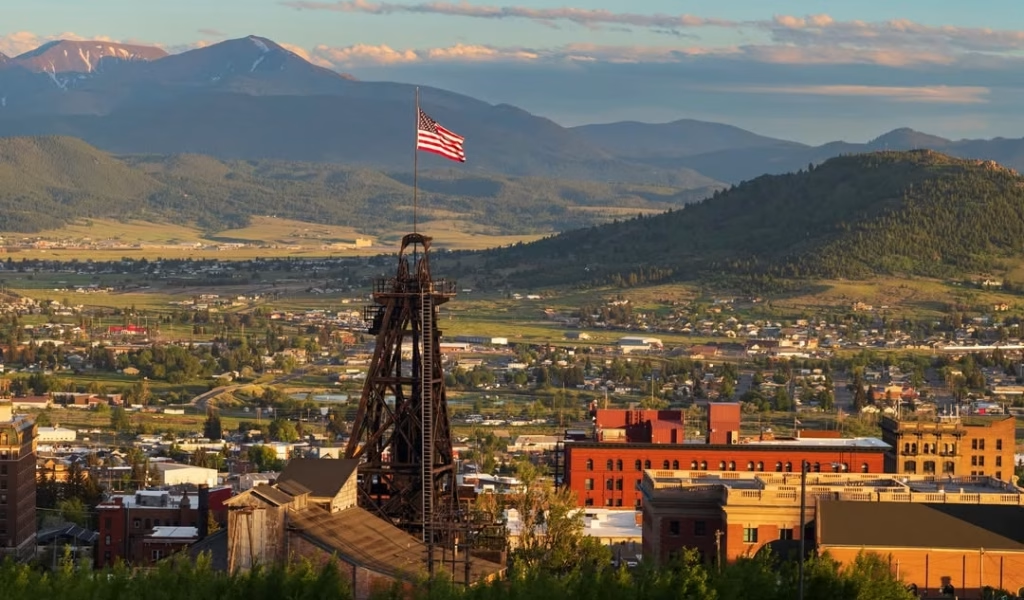
One of fourteen headframes, nicked named "gallows frames", dot the Butte, Montana skyline which mark the remnants of mines that made the area “The Richest Hill on Earth” in the early 1900's.
Butte Project #1 – Atlas Power Group
  • Atlas Power Group is a California based company that runs data centers in MT, KY, ND, and TX. 
  • NorthWestern Energy is in an agreement with Atlas to provide them with an expansion of 150 megawatts to their flagship cryptomining facility in Butte
  • It is unclear if the expansion will also be for cryptocurrency
  • The announced start date is mid-2027
  • Atlas is currently in the ‘Letter of Intent’ stage with NorthWestern 
  • Sources:
Butte02
Butte Project #2Sabey Data Centers
  • Sabey Data Centers is a Seattle based company that operates data centers in WA, OR, NY, TX, and VA
  • Sabey reached a deal with NorthWestern to receive 250 megawatts of power for their project that is being proposed just west of Butte
  • The announced start date is mid-2027
  • Sabey is currently in the ‘Letter of Intent’ stage with NorthWestern
  • Sources:

PRIMARY CONCERNS

ENERGY
Quantica’s proposed project in Broadview would require one gigawatt of energy to run. That is more power than NorthWestern Energy provides to all of its Montana customers on an average day and would be enough electricity to power about 900,000 homes. NorthWestern Energy customers have seen about a 22% increase in their monthly energy bills since 2020 - and that is without taking into account the massive amount of spending the utility will have to do to service data centers.
TAXES
Large data centers in Montana are taxed at 0.90% of their market value. For comparison, that's the same rate an average homeowner pays for residence tax (0.90% on market values between $378,001 - $756,000). And data centers actually pay less in tax than those who own second homes, short-term rentals, multifamily dwellings, and less tax than all commercial and industrial land (1.50%-1.90%). Worst of all, they pay less than half of what farmers pay for qualified agricultural land (2.05%).
LAND
The proposed data center in Broadview is set to cover 5,000 acres - equivalent to over 3,780 football fields. That is more than 31 times the size of the town of Broadview (160 acres).
TRANSPARENCY
The data center industry is incredibly secretive. It’s often very difficult to find out who is behind projects, the plans for how the construction will impact communities, or if the tech companies are receiving any subsidies or tax breaks. Additionally, the troubling practice of Non-Disclosure Agreements between big tech and local governments leads to residents not being able to weigh-in on these important developments before they impact their communities.

HOW WE WIN!

The Movement Has Begun

As you can see, Big Tech has set its sights on Montana. Private equity backed companies are proposing to blanket thousands of acres of our state with massive data center campuses. The industry and its allies want you to believe this is all inevitable. That resistance is futile. Fortunately, that is a lie.

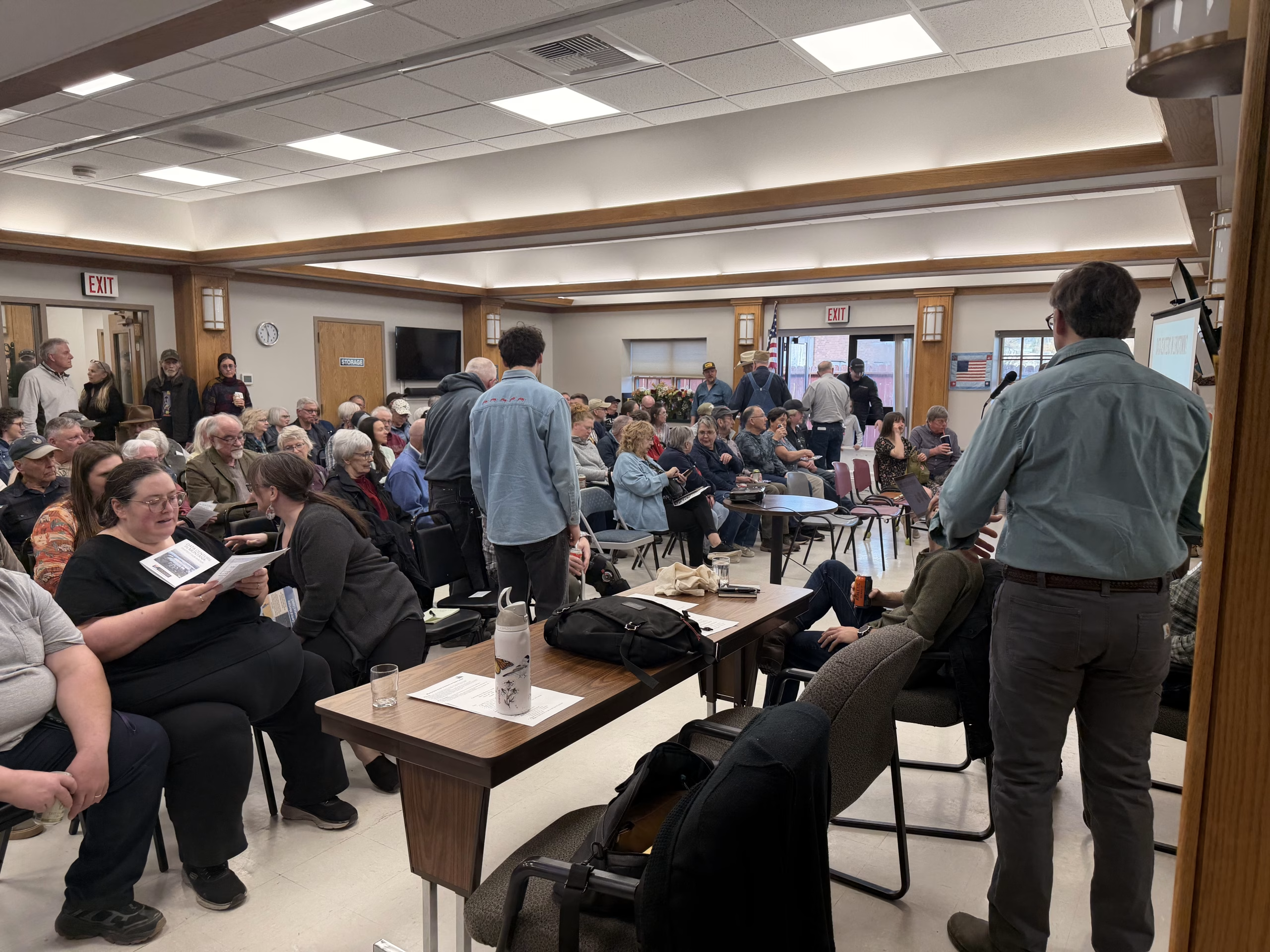
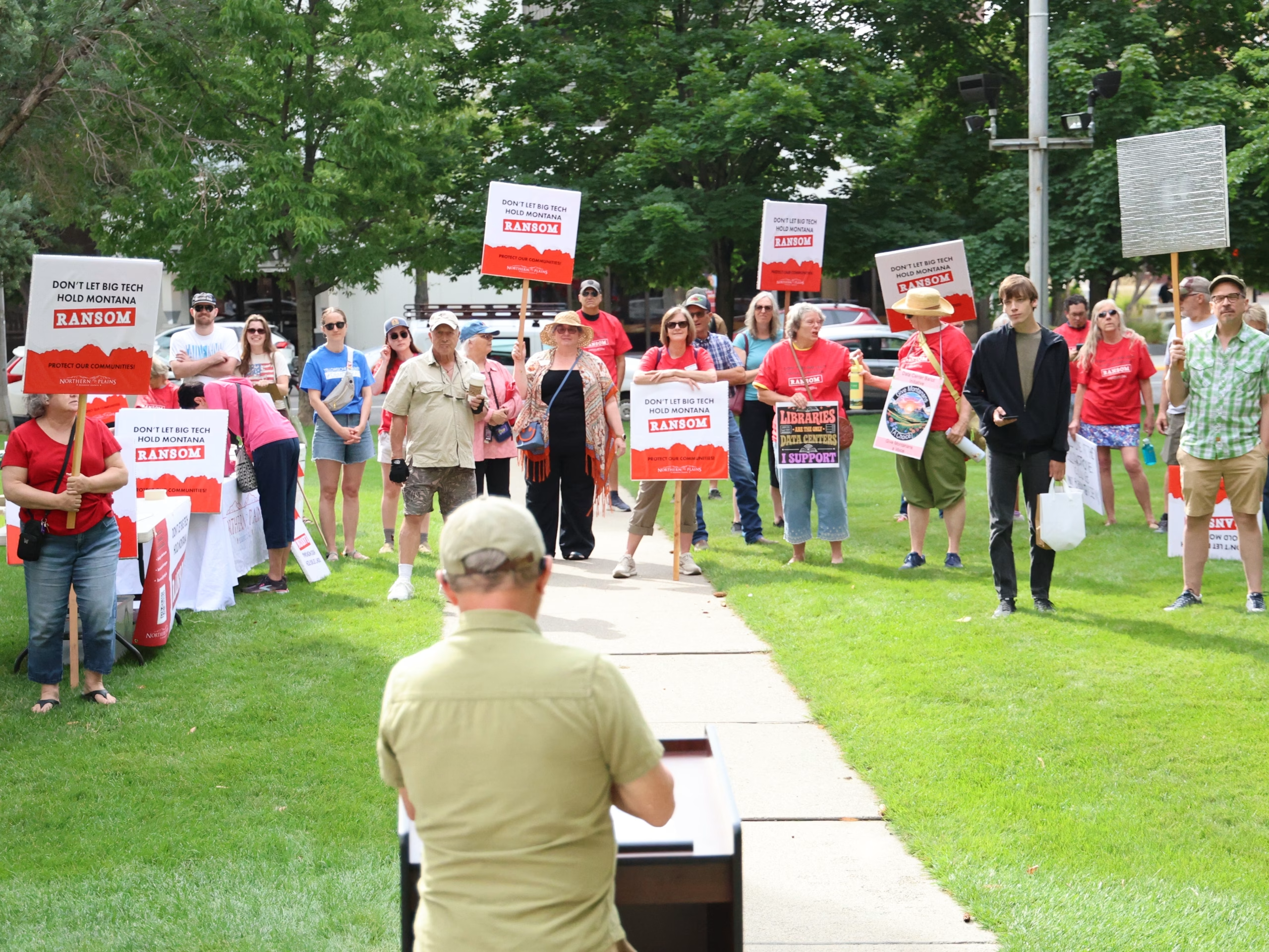
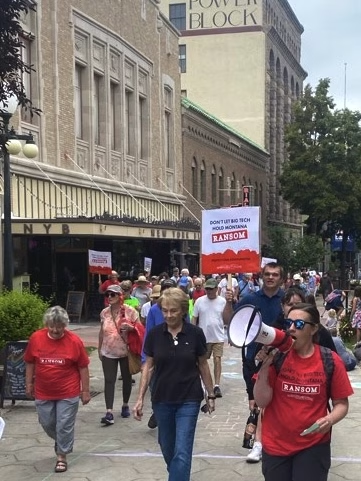
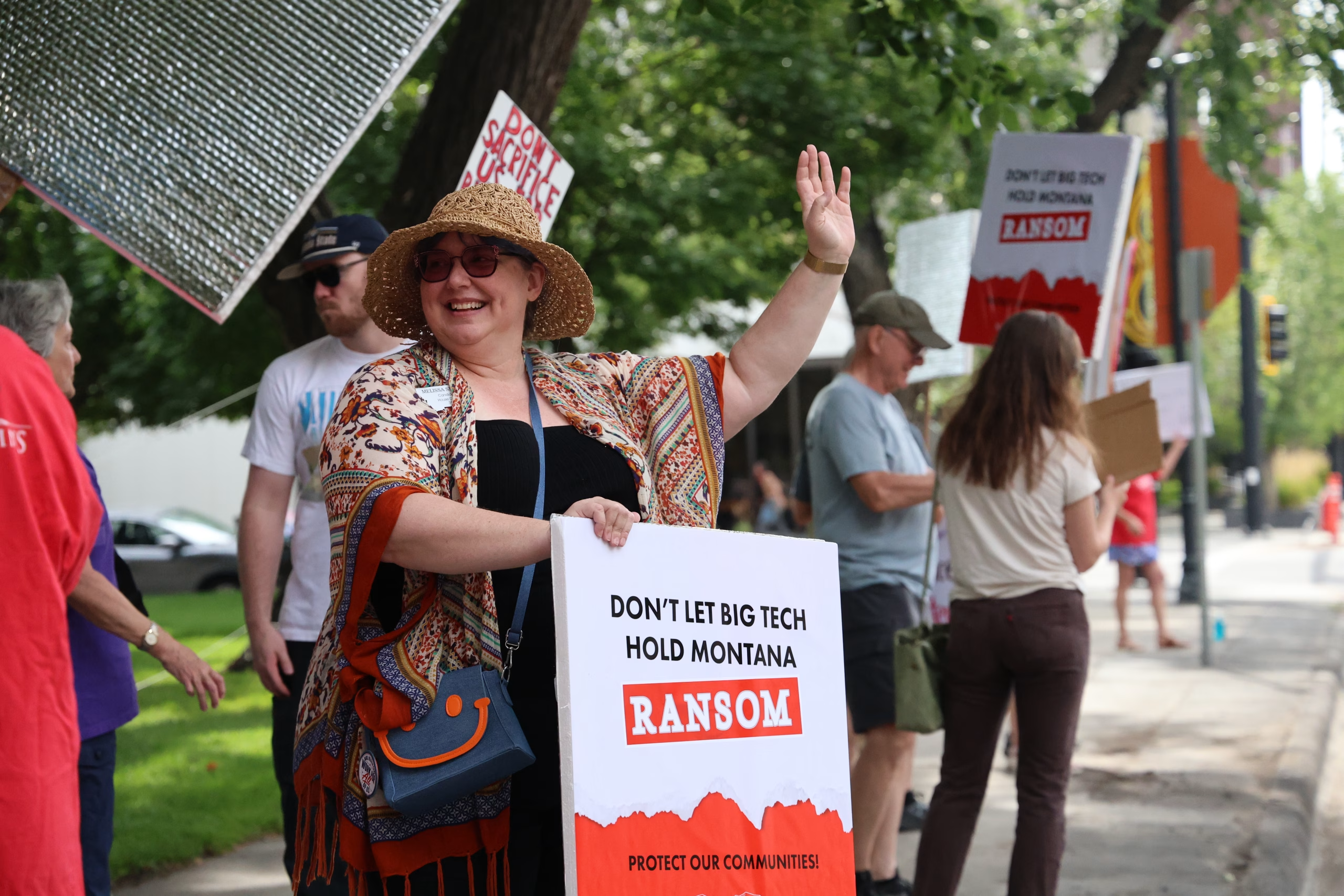
In March, more than 150 people packed a Northern Plains event in Lewistown to learn about data center proposals and how they can get involved in local organizing against them. Multiple state legislators, county commissioners, and reporters also attended. That kind of turnout, in a rural Montana community, on a complex policy issue, doesn’t happen by accident. It happens when people understand what’s at stake and are ready to fight for the place they love.

What’s happening in Montana right now is not just people showing up to events. Northern Plains is building something deeper: An organized base of leaders who can sustain a fight over the months and years ahead. Organizing means building teams of people rooted in shared self-interest, with clear roles, real accountability, and a power mission that extends far beyond any single meeting.

This is what it looks like to build what we call a “team of co-conspirators,” people bound together not by obligation but by a shared stake in Montana’s future, each holding a consequential piece of the work.

The data center industry frames their proliferation as unstoppable. A force of nature that communities must simply accept. That framing is designed to demoralize us before the fight even begins.

Ordinary people, organized together with a clear plan and shared purpose, are the most powerful force in this democracy.

The truth is that organized communities are blocking and delaying these projects at a remarkable rate. According to Data Center Watch, between May 2024 and March 2025, local opposition blocked or delayed $64 billion in U.S. data center projects. Then, in just three months from March to June 2025, that number jumped to $98 billion more, according to WIRED. At least 142 groups across 24 states are now organizing against data center construction.

Montana’s Legislature convenes again in January 2027. The upcoming session will be decisive for what data center development looks like in our state, but we are not waiting for the Legislature to convene. Thanks to Northern Plains members like you, the organizing is happening now in one-on- one conversations across the state. Each conversation is an invitation to lead, not just to show up. To take a real role in a fight with real consequences.

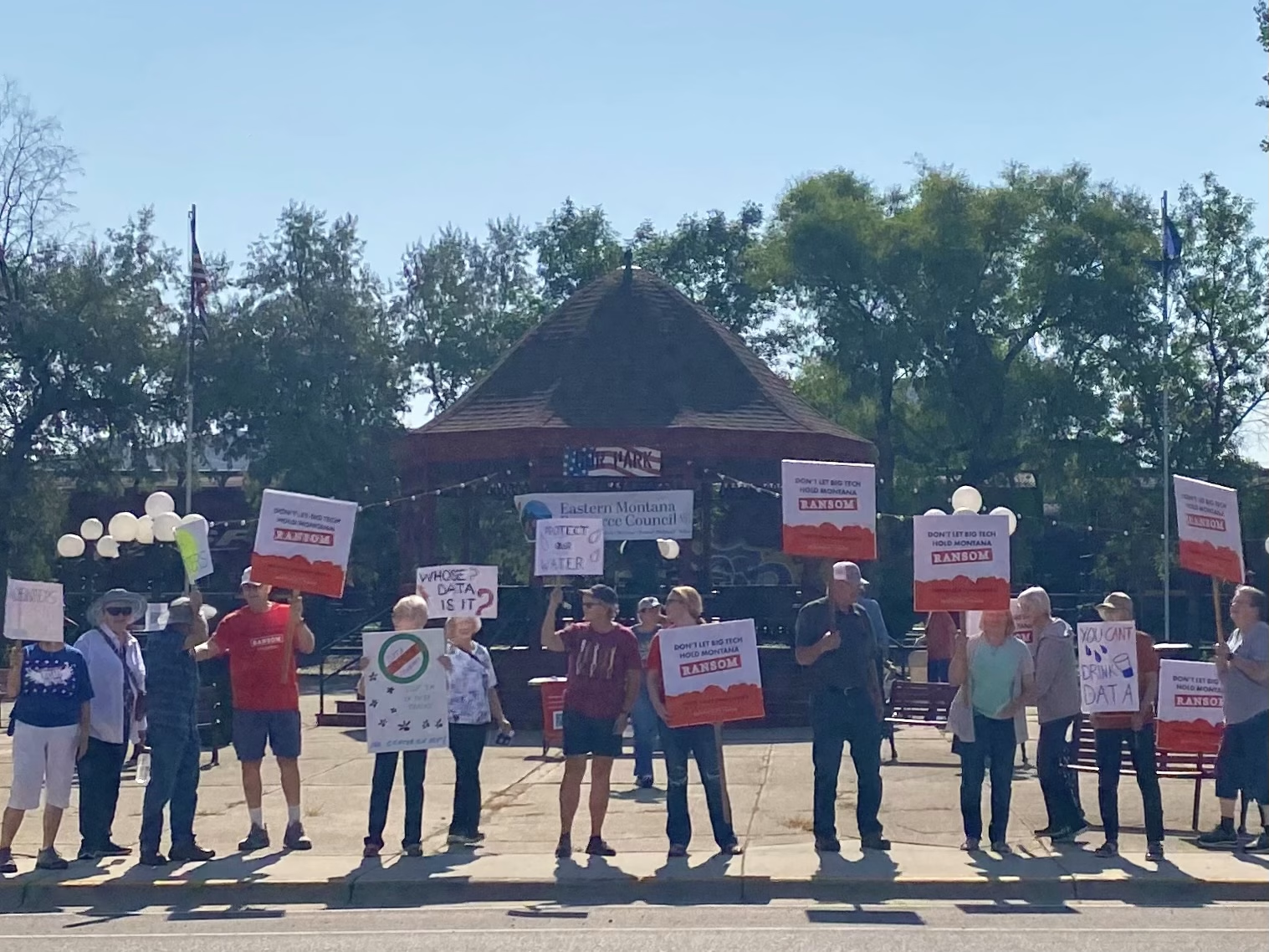
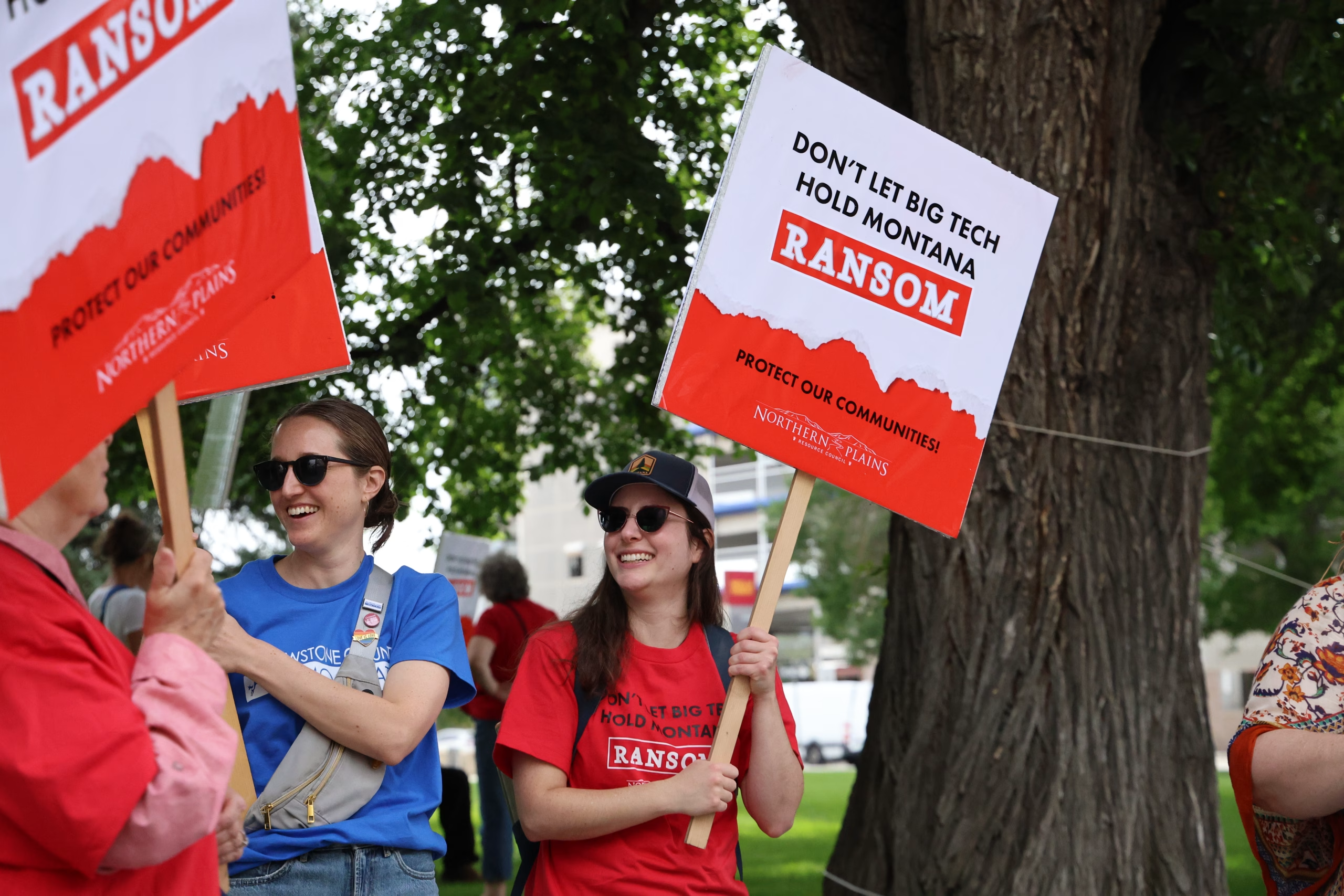
MEMBERS IN ACTION